2025 Guide: How to Choose the Best Thermal Paper Rolls for Your Business
In the ever-evolving landscape of business operations, the choice of materials plays a pivotal role in ensuring efficiency and profitability. One indispensable resource across various industries is thermal paper rolls, which are widely utilized in point-of-sale transactions, receipt printing, and various label applications. According to a market research report by Smithers Pira, the global thermal paper market was valued at over $3 billion in 2020, with a projected annual growth rate of 5% through 2025. This growth underscores the increasing reliance on thermal paper across sectors such as retail, hospitality, and logistics.
Selecting the best thermal paper rolls is critical for businesses not only to enhance operational efficiency but also to maintain customer satisfaction. The quality of thermal paper directly affects printing clarity and durability, influencing factors such as brand perception and transaction accuracy. As more businesses transition to sustainable practices, the demand for eco-friendly thermal paper has surged, prompting manufacturers to innovate and develop products with reduced environmental impact. Understanding the nuances of thermal paper types, coatings, and compatibility with printing devices can empower businesses to make informed decisions that align with their operational needs and sustainability goals. Ultimately, this guide aims to equip business owners with essential insights into choosing the right thermal paper rolls to maintain a competitive edge in their respective markets.

Understanding Thermal Paper: What It Is and How It Works
Thermal paper is a unique type of paper that is coated with a heat-sensitive layer. When exposed to a thermal print head, which creates heat, the coating darkens to produce an image or text. This technology is widely used in various applications, such as receipt printers, labels, and tickets, thanks to its efficiency and speed. Unlike traditional paper that requires ink or toner, thermal paper creates prints using heat alone, which can lead to lower operating costs for businesses.
When selecting thermal paper for your business, consider the type of thermal paper that best suits your printing needs. There are two main types: direct thermal and thermal transfer. Direct thermal paper is ideal for short-term use, such as receipts, while thermal transfer paper is more durable and suited for labels that need to last longer.
**Tips:** Always check the compatibility of the thermal paper with your printer model before making a purchase. Additionally, consider the thickness and width of the rolls to ensure they fit your printing equipment. Choosing the right quality of thermal paper can significantly impact print clarity and longevity, making it essential to prioritize quality over cost.
Factors to Consider When Choosing Thermal Paper Rolls
When selecting thermal paper rolls for your business, several critical factors must be considered to ensure you choose the best option for your needs. First, it's crucial to assess the paper's quality. According to a report by the International Journal of Innovative Technology and Exploring Engineering, paper quality significantly impacts the lifespan and clarity of printed images, with high-quality thermal paper ensuring clear and durable prints that resist fading over time. This is particularly essential for businesses that rely on receipts or labels, as poor-quality paper can lead to customer dissatisfaction and increased operational costs due to reprinting.
Another vital aspect is the roll size and compatibility with your existing printers or point-of-sale systems. Different printers require specific dimensions for thermal paper rolls, including width and diameter. Ensuring compatibility not only optimizes printing efficiency but also prevents delays and wastage. Research from The Business Research Company highlights that businesses lose approximately 3% of their revenues due to inefficiencies, which can often stem from mismatched supplies.
Tips: When choosing thermal paper rolls, always check the specifications of your printer to match the size requirements precisely. Additionally, consider purchasing from suppliers who provide a satisfaction guarantee, ensuring you can return or exchange products that do not meet your expectations. Finally, prioritize eco-friendly options—many companies are transitioning to sustainable thermal papers that offer both quality and environmental benefits.
Types of Thermal Paper Rolls and Their Applications
When selecting thermal paper rolls for your business, understanding the various types and their applications is crucial. Thermal paper can be broadly categorized into direct thermal and thermal transfer paper. Direct thermal paper is often used for applications like receipts or shipping labels, where the print is produced by applying heat directly to the paper. According to industry analyses, the global direct thermal paper market is projected to reach USD 3.4 billion by 2025, highlighting its popularity in sectors that require quick and efficient printing processes.
On the other hand, thermal transfer paper is utilized in scenarios where durability and longevity are paramount. This type of paper is often coated to allow printing via a ribbon that melts ink onto the surface, making it ideal for barcodes, product labeling, and tags that need to withstand exposure to moisture and chemicals. Reports indicate that the thermal transfer paper market is expected to grow, driven by increasing demand from manufacturing and logistics industries. As companies lean towards automation and improved inventory management, the choice of the right thermal paper type will greatly influence operational efficiency and customer satisfaction.
2025 Guide: Thermal Paper Roll Types and Applications
Tips for Sourcing Quality Thermal Paper for Your Business
When sourcing quality thermal paper for your business, it's crucial to consider various factors that ensure product performance and compatibility with your printing systems. A key aspect to pay attention to is the paper's thermal sensitivity. High-quality thermal paper, typically featuring a smooth, coated surface, ensures sharper print quality and longer-lasting readability. According to a report by MarketsandMarkets, the thermal paper market is expected to reach $4.2 billion by 2025, underscoring the growing demand for reliable thermal printing solutions.
In addition to sensitivity, the environmental impact of your thermal paper choice is increasingly important. Many businesses look for BPA-free thermal paper as a safer alternative for their employees and customers. Recent findings published by the Journal of Hazardous Materials revealed that exposure to BPA can have serious health implications, which has led to a trend in utilizing eco-friendly materials. Moreover, sourcing from suppliers who practice sustainable forestry can not only enhance your brand’s reputation but also contribute to better environmental practices.
Finally, effective supplier relationships can vastly improve the quality of thermal paper you source. Conduct market research to find those who meet industry standards and can provide certification for their products. The right supplier should also be able to support your specific printing needs, whether it’s for receipts, labels, or tickets, ensuring that you receive a consistent and reliable product tailored to your business model.
Cost Analysis: Balancing Quality and Budget for Thermal Paper Rolls
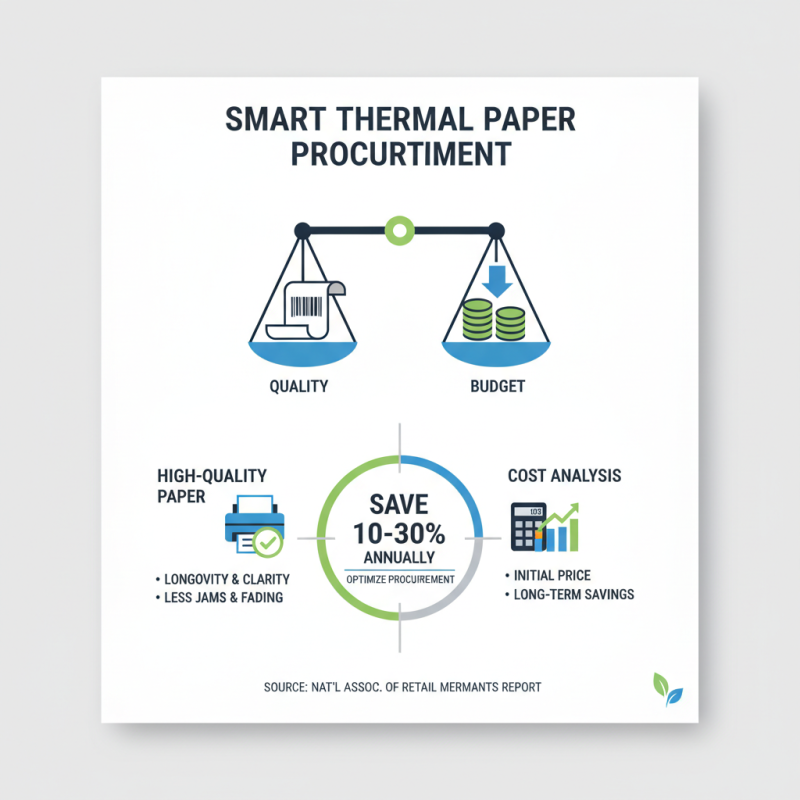
When selecting thermal paper rolls for your business, cost analysis is crucial for striking a balance between quality and budget. According to a recent report from the National Association of Retail Merchants, businesses can save between 10% to 30% annually by optimizing their thermal paper procurement strategy. This emphasizes the need to not only consider the initial purchase price but also the long-term implications of paper quality. High-quality thermal paper tends to have better longevity and print clarity, reducing the likelihood of issues such as fading or jamming that can disrupt operations and incur additional costs.
Moreover, research from the Paper Industry Association reveals that while cheaper thermal paper options might be enticing, they often result in increased expenses due to higher printer maintenance and replacement rates. The analysis indicates that investing in quality thermal paper not only enhances operational efficiency but also contributes to a better customer experience — an essential factor for businesses looking to maintain loyalty in a competitive market. Thus, it’s vital for businesses to assess their projected volume needs and balance these against their budget constraints to ensure they select the most cost-effective and reliable thermal paper rolls available.