How to Choose the Best Heat Transfer Printer Paper?
Choosing the right Heat Transfer Printer Paper is crucial for successful printing. Industry statistics show that a high-quality paper can improve print durability by over 50%. Many businesses underestimate this aspect, leading to poor results. As noted by industry expert Robert Mason, "The quality of heat transfer paper can make or break your project."
Correct selection can enhance the vibrancy and longevity of your prints. However, many users struggle with this decision. They often overlook factors such as paper weight, coating, and compatibility with their printers. Choosing a subpar option could result in fading colors and peeling images. Many are left frustrated with the outcomes.
When evaluating Heat Transfer Printer Paper, understanding your specific needs is essential. Some papers are better for dark fabrics, while others work best on light surfaces. Industry trends also indicate a growing demand for eco-friendly options. Balancing quality with environmental responsibility is a challenge many face today. Each decision matters more than it seems.
Understanding Different Types of Heat Transfer Printer Paper
When selecting heat transfer printer paper, understanding the types available is crucial. There are primarily two categories: inkjet and laser heat transfer paper.
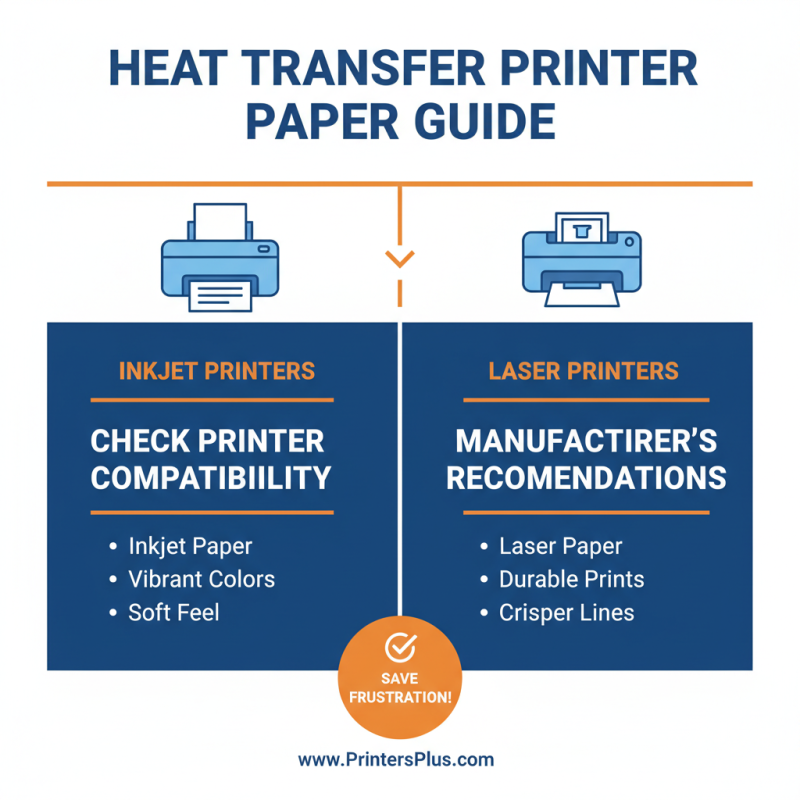
Inkjet paper is designed for vibrant colors. It's ideal for intricate designs as it absorbs ink efficiently. Conversely, laser paper tends to produce sharper outlines, suitable for professional-grade finishes.
Data indicates that about 75% of users prefer inkjet for its vivid results, but the quality can vary. Some low-cost inkjet papers may not withstand multiple washes.
A study from a printing industry report suggested that 30% of customers have faced durability issues with cheaper options. Choosing the right type is important for long-lasting prints.
Another factor is the color of the fabric. Light fabrics require different paper than dark ones.
White or light papers are often suitable for vibrant colors, while dark paper is essential for deep or vivid hues. Many users underestimate this detail, leading to subpar results. Ultimately, knowing the material's characteristics can lead to better choices in the heat transfer printing process.
Evaluating Print Quality and Color Transfer Characteristics
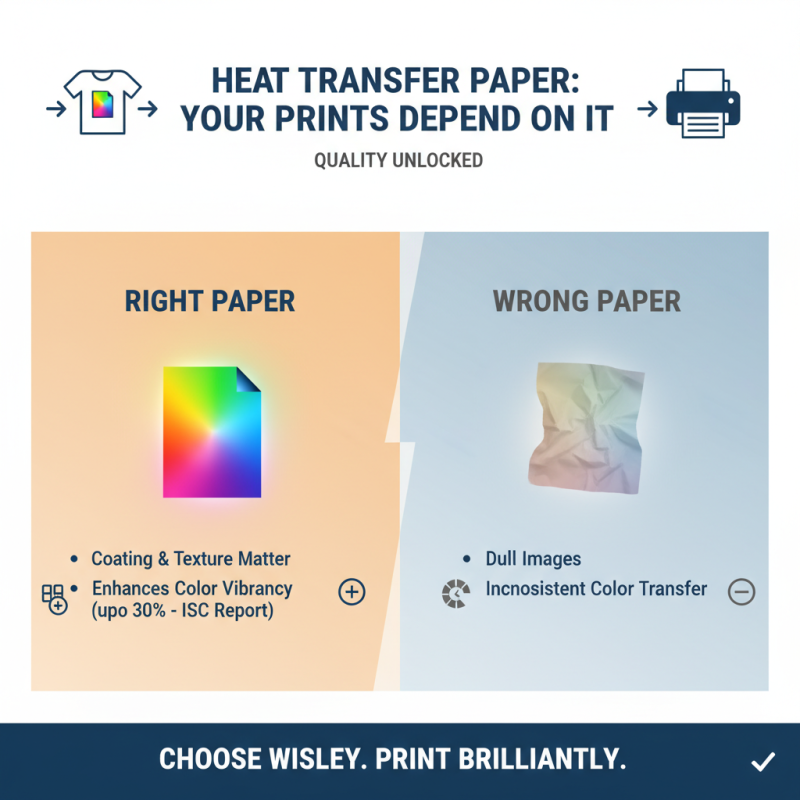
Choosing the right heat transfer printer paper is crucial for achieving high-quality prints. Print quality greatly depends on the paper's coating and texture. A report from the Imaging Supplies Coalition (ISC) indicates that the right paper can enhance color vibrancy by up to 30%. In contrast, subpar paper can lead to dull images and inconsistent color transfer.
Evaluating the color transfer characteristics is equally important. Many users overlook how paper weight affects image durability. Lighter papers may offer initial sharpness but can fade quickly. Conversely, heavier papers often hold color better over time. According to a study by the Specialty Graphic Imaging Association (SGIA), papers weighing over 200 gsm tend to yield images that last longer under various conditions.
Often, the choice comes down to trial and error. Not all papers deliver the same results, even from similar categories. Users may find that a direct-to-garment transfer on one paper works beautifully, while another fails. It's essential to experiment with samples to find the best fit for your specific printing needs. The process can be frustrating but ultimately leads to greater satisfaction with the final product.
Assessing Compatibility with Your Printer and Materials
Choosing the right heat transfer printer paper starts with understanding your printer. Different printers have varying capacities. Some are designed specifically for inkjet, while others work better with laser printers. You need to check the manufacturer's recommendations for paper compatibility. This can save you a lot of frustration.
Next, consider the materials you plan to print on. Cotton and polyester require different types of transfer paper. Some papers work well on dark fabrics, while others are best suited for light colors. Experimenting with different papers can lead to unexpected results. It’s not uncommon to see colors that look vibrant on one material but fade on another. Pay attention to these inconsistencies, as they can impact your final product.
Be mindful of the settings on your printer. Incorrect heat settings can ruin your transfer. Sometimes, it’s helpful to jot down your experiences. Did a paper warp? Did a design smudge? Documenting the details can help refine your process. Everyone faces challenges in this journey, and learning from mistakes is key. Adjusting based on previous outcomes can lead you closer to achieving the perfect transfer.
Considering Cost-Effectiveness and Availability
When choosing heat transfer printer paper, cost-effectiveness is key. Look for options that offer quality without breaking the bank. A good price often reflects bulk buying. However, low-cost paper can lead to poor transfer quality. This can waste your time and resources. Balance is essential.
Availability is another important factor. Some papers may be hard to find. This can cause delays in your projects. Always check local suppliers and online options. It helps to look for papers that are widely in stock. If you rely on a rare type, you might face setbacks.
Consider testing different papers before making a decision. Some may perform better than expected while others fall short. It’s worth experimenting to find the right match. Pay attention to feedback from others. Their experiences can guide your choices. Don't forget to review your results. Reflect on what worked and what didn't.
Reviewing User Experiences and Recommendations
When selecting heat transfer printer paper, user experiences can provide valuable insights. Many users emphasize the importance of compatibility. Different printers may respond better to specific types of paper. It’s essential to consider the materials you plan to print on. Cotton fabric often yields different results compared to polyester blends. Be mindful of this as it impacts the final quality.
User reviews often highlight the differences in color vibrancy. Some have noted that certain papers produce more vibrant colors, while others appear dull. It can be frustrating to invest time and resources, only to be disappointed. Experimentation is key. Testing a few different types of paper can lead to unexpected yet informative outcomes. Users sometimes share their successes and failures online, which can guide your choices.
Another common reflection is about durability. Some users found that their prints faded after a few washes. This can be disheartening for anyone aiming for long-lasting designs. Pay attention to feedback regarding durability. It might be worthwhile to sample various papers before committing to a bulk purchase. The learning process itself can reveal much about what works best for your needs.