Leave Your Message
Choosing the right Heat Transfer Printer Paper can determine whether a custom design survives one wash or many. Global buyers face different fabrics, printers, inks, climates, and shipping conditions. A paper that performs well on cotton may fail on polyester. Another may produce vivid colors but leave a stiff, noticeable finish.
This guide reviews seven practical options for international purchasing and production teams. Each choice is considered through print clarity, cutting behavior, transfer temperature, fabric compatibility, wash durability, and handling requirements. We also consider technical documents, supplier consistency, packaging quality, and user feedback. These details matter when orders cross borders and replacement stock takes weeks to arrive.
Real testing remains essential. A sample sheet should be printed, pressed, cooled, washed, and inspected under normal working conditions. Check small text, fine edges, dark garments, and stretch fabrics. Do not trust a product description alone. Even experienced buyers can overlook ink compatibility or incorrect pressure settings. No paper wins every job.
The seven selections are not ranked by marketing claims alone. They are intended to help apparel decorators, small businesses, wholesalers, and production managers compare realistic options. Some papers may offer easier peeling, while others may provide a softer touch or stronger color retention. Buyers should confirm printer models, ink types, regional availability, and current supplier specifications before placing a large order. Conditions change. Careful testing still provides the clearest answer.
7 Best Heat Transfer Printer Papers for Global Buyers
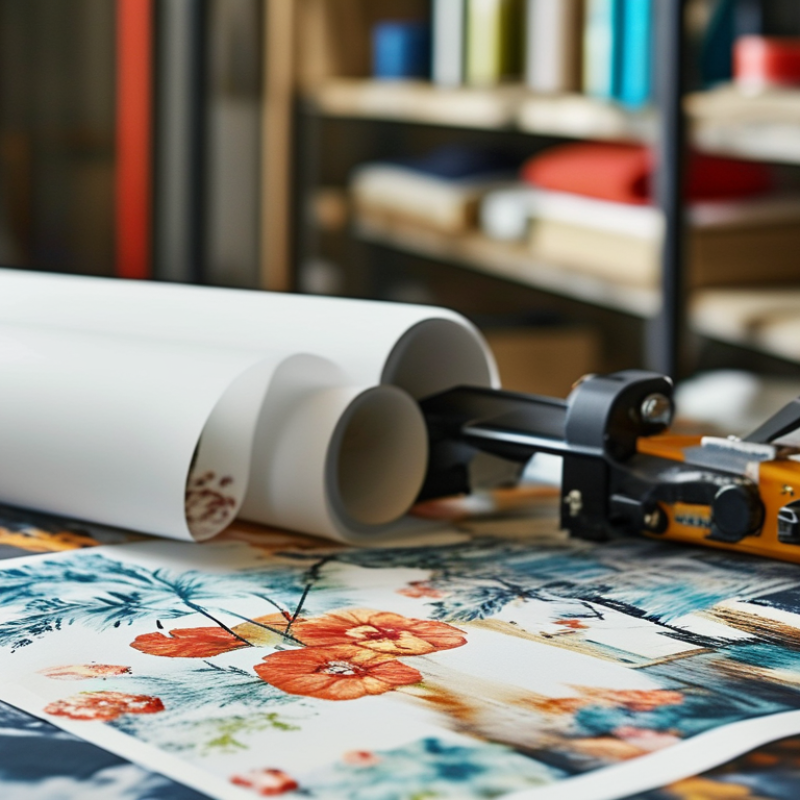
Heat transfer paper should be selected by printing method, fabric color, and coating design. The seven main types are inkjet light-fabric paper, inkjet dark-fabric paper, laser light-fabric paper, laser dark-fabric paper, sublimation paper, screen-print transfer paper, and pigment-ink transfer paper.
Inkjet light paper usually has a transparent coating for white cotton garments. Dark-fabric inkjet paper adds an opaque white layer, often with a slightly heavier hand feel. Laser light paper uses heat-reactive toner adhesion, while laser dark paper includes a white base layer. Sublimation paper has a fast-drying, low-curl coating for polyester. It cannot transfer onto ordinary cotton. Screen-print transfer paper carries plastisol or water-based ink layers and supports stronger production consistency. Pigment-ink paper uses a receptive coating designed for cotton and blended fabrics, but wash durability can vary.
The market is moving toward digital textile decoration. Smithers’ industry outlook has projected continued double-digit growth for digital textile printing through the late 2020s. Grand View Research has also reported strong expansion in textile printing, driven by short runs and customized apparel. These figures support demand, but paper performance still depends on testing. Temperature, pressure, peeling time, and fabric pretreatment can change the result. Small errors matter.
In practical testing, I check a five-centimeter corner first. Then I wash the sample at least five times. A glossy coating may look attractive but feel stiff. A soft coating may sacrifice fine-detail sharpness. No single paper wins every application.
| No. | Heat-Transfer Paper Type | Transfer Method | Coating or Construction | Recommended Printer / Ink | Best Substrates | Typical Transfer Temperature | Key Advantages | Main Limitations | Typical Applications |
|---|---|---|---|---|---|---|---|---|---|
| 1 | Dye-Sublimation Transfer Paper | Sublimation transfer | Fast-drying, high-release paper coating designed to hold dye-sublimation ink on the surface and release it as a gas under heat. | Sublimation printer using dye-sublimation ink; not suitable for ordinary pigment or dye ink. | White or light-colored polyester fabric, polyester-coated ceramics, metal panels, glass, and other polymer-coated hard surfaces. | Usually about 180–205°C for approximately 30–90 seconds, depending on the substrate and press. | Excellent color penetration, soft hand on polyester textiles, high image detail, and no visible transfer film. | Requires polyester or a suitable polymer coating; cannot normally transfer onto untreated cotton; white ink is not used. | Sportswear, flags, mugs, signage, awards, photo panels, and personalized polyester products. |
| 2 | Inkjet Transfer Paper for Light Fabrics | Inkjet transferLight garment | Transparent or translucent polymer coating that receives ink and forms a printable transfer layer. | Standard inkjet printer using compatible dye-based or pigment-based ink; always verify the paper's ink compatibility. | White and light-colored cotton, cotton blends, and some compatible polyester fabrics. | Commonly about 150–190°C for approximately 10–30 seconds, depending on the product and fabric. | Low equipment cost, easy short-run production, good color reproduction on light backgrounds, and suitable for photographs. | Transparent areas remain the color of the fabric; unsuitable for dark garments unless the design is intentionally adapted. | Custom T-shirts, tote bags, aprons, school projects, small-batch apparel, and home craft production. |
| 3 | Inkjet Transfer Paper for Dark Fabrics | Inkjet transferDark garment | Opaque white polymer or pigment-receiving coating that provides a light base so printed colors remain visible on dark textiles. | Standard inkjet printer using compatible dye-based or pigment-based ink; some products require mirrored artwork while others do not. | Black and dark-colored cotton, cotton blends, and selected polyester fabrics. | Commonly about 150–190°C for approximately 10–30 seconds, subject to the media and fabric manufacturer's instructions. | Works on dark garments, produces bright graphics, and supports full-color images without requiring a white-ink printer. | Leaves a visible polymer transfer layer and may feel heavier; trimming or contour cutting is often needed to reduce the white background. | Dark T-shirts, hoodies, workwear, bags, uniforms, and personalized cotton garments. |
| 4 | Laser Transfer Paper for Light Fabrics | Laser transferLight garment | Heat-activated polymer coating designed to accept toner and bond to the fabric during pressing; usually transparent in unprinted areas. | Color laser or LED printer using dry toner; must not be used in an inkjet printer. | White and light-colored cotton, cotton blends, and compatible synthetic fabrics. | Often about 150–190°C for approximately 10–30 seconds, depending on the toner system and media. | Sharp text, good small-detail reproduction, quick drying because toner is dry, and reliable short-run production. | Unprinted areas are generally transparent; excessive heat or incompatible toner can cause poor adhesion or image distortion. | Event apparel, labels, small logos, promotional garments, and on-demand textile printing. |
| 5 | Laser Transfer Paper for Dark Fabrics | Laser transferOpaque transfer | Opaque white or light-colored polymer layer, often supplied as a multi-step transfer system to create a solid base on dark textiles. | Color laser or LED printer using compatible dry toner; printer fuser temperature and paper path must support the media. | Dark cotton, cotton blends, polyester blends, and selected coated textiles. | Commonly about 150–190°C for approximately 10–30 seconds, with some systems requiring a second bonding step. | Strong color contrast on dark garments, crisp fine lines, and good productivity for short to medium runs. | Can create a noticeable transfer feel; multi-step systems require more handling and careful alignment. | Dark uniforms, promotional clothing, sports apparel, workwear, and detailed graphic designs. |
| 6 | Self-Weeding Laser Transfer Paper | Laser transferNo-cut transfer | Special release and adhesive layers are engineered to transfer toner and adhesive while leaving much of the unprinted background behind. | Compatible color laser or LED printer using dry toner; suitability depends on fuser temperature, toner formulation, and paper path. | Light and dark cotton or blended fabrics, depending on the specific system. | Often about 150–180°C for approximately 10–25 seconds; some products use a two-paper or two-press process. | Reduces manual weeding, supports detailed multicolor artwork, and can produce a cleaner background than conventional opaque transfer paper. | Higher media cost, more process-sensitive, and compatibility testing is essential because not every laser printer can run the material. | Fine lettering, sports numbers, promotional graphics, workwear, and medium-volume garment decoration. |
| 7 | Direct-to-Film (DTF) Transfer Film | DTF transferPowder adhesive | Coated polymer film receives printed ink, white ink, and hot-melt adhesive powder; the film is cured before heat pressing. | DTF printer using textile pigment ink, including white ink, plus hot-melt adhesive powder and a curing unit or oven. | Cotton, polyester, blends, denim, nylon, and many light or dark textiles that tolerate heat and pressure. | Commonly about 130–170°C for approximately 10–20 seconds, followed by cold or warm peel according to the film system. | Works on many fabric colors, provides strong opacity, supports detailed multicolor graphics, and is suitable for batch production. | Requires specialized equipment and consumables; the printed layer can feel more substantial than sublimation; DTF film is a film media rather than paper. | Custom apparel, uniforms, cotton garments, polyester sportswear, small businesses, and on-demand production. |